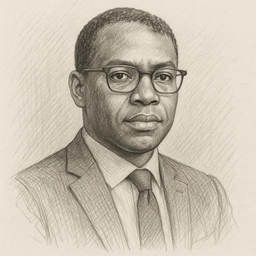
The economics of writing the first check
When Charles Hudson launched Precursor Ventures in 2015, the firm occupied a frontier most institutional investors considered too risky to professionalize: the space before product-market fit, before meaningful revenue, sometimes before a finished product. Nearly a decade later, that frontier has become its own asset class.
Precursor operates at the absolute edge of venture capital, deploying checks between $100,000 and $250,000 into companies that often exist as little more than founder conviction and a slide deck. The firm's portfolio construction reflects this extreme positioning—targeting more than 150 companies per fund cycle, a volume that would horrify traditional seed investors who typically back 20 to 30 startups.
The math works differently at this altitude. Where a conventional seed fund might expect 30 percent of portfolio companies to return capital, precursor-stage investors accept failure rates approaching 70 percent. The strategy depends entirely on outliers—the handful of companies that survive multiple funding rounds to reach valuations measured in hundreds of millions or billions.
"You're essentially buying lottery tickets, except the odds are better and you can influence the outcome," explains Maria Santos, managing partner at Catalyst First Fund in São Paulo, which mirrors Precursor's model across Latin America. "Our job isn't to pick winners at this stage. It's to not miss them."
This creates a fundamentally different returns profile than later-stage venture capital. Time horizons stretch longer—precursor investors often wait seven to ten years for meaningful liquidity events. Portfolio diversification becomes mandatory rather than optional. And the entire strategy hinges on follow-on capital availability, making precursor funds acutely sensitive to downstream venture conditions.
From Silicon Valley exception to global template
Precursor's founding coincided with a broader restructuring of venture capital itself. As software ate traditional industries and startup formation costs collapsed, the monolithic model of venture funds covering every stage began to fragment. Specialized vehicles emerged for each phase: accelerators, precursor funds, seed funds, Series A specialists, growth equity, and pre-IPO crossover investors.
What began as a Sand Hill Road innovation has metastasized globally. Ultra-early funds now operate across Southeast Asia, where firms like Iterative and Antler write first checks in Jakarta and Manila. In Sub-Saharan Africa, precursor-stage capital flows through vehicles like Microtraction in Lagos and First Check Africa in Nairobi. Eastern European founders encounter similar models through Tiny.vc and a constellation of operator-led micro-funds.
The structural drivers transcend geography. Cloud infrastructure and no-code tools have driven company formation costs toward zero—a technical founder can now build and deploy a functional product for less than $10,000, down from millions two decades ago. Social platforms have democratized founder networks, allowing talent in Accra or Bangalore to access the same knowledge bases and potential customers as peers in Palo Alto. Regional exit markets have matured sufficiently that venture-backed companies can achieve liquidity without relocating to the United States.
"The precursor model scales globally because the inputs have commoditized," notes James Fitzgerald, venture economist at the Kauffman Fellows Program. "Geographic arbitrage still exists in talent costs, but the infrastructure to validate an idea and reach initial customers is now universally accessible."
Selection at scale: how precursor-stage investors evaluate risk
Operating at volume fundamentally changes how investment decisions get made. Traditional due diligence—financial modeling, competitive analysis, reference checks with customers—largely evaporates when companies lack revenue, finished products, or meaningful traction.
Deal sourcing shifts from pattern-matching to network density. Precursor investors cultivate founder referral networks, engage heavily in community platforms, and maintain visible presences at hackathons and accelerator demo days. The strategy depends on seeing everything rather than selecting from curated opportunities that reach larger funds.
Evaluation criteria skew heavily toward founder assessment and market timing. Can this person withstand the psychological warfare of early-stage entrepreneurship? Does the market structure suggest an imminent shift that creates space for new entrants? Are there structural advantages—regulatory changes, technological discontinuities, demographic trends—that make now the moment for this idea?
Financial projections receive minimal weight. Product completeness matters less than technical feasibility and founder capability. The question isn't whether the current approach will succeed, but whether the founding team can iterate fast enough to find something that works before capital runs out.
Portfolio management becomes the critical value-add. Precursor investors function as bridges to institutional capital, providing follow-on signal to seed and Series A funds while offering strategic guidance through multiple fundraising cycles. The relationship resembles coaching more than monitoring—helping founders professionalize operations, refine pitches, and navigate the venture ecosystem.
Friction points in the precursor economy
The economics of precursor investing intensify venture capital's already extreme power law dynamics. Roughly five to ten percent of investments account for the majority of fund returns, making winner identification timing absolutely critical. Miss the follow-on round for a breakout company and the initial precursor check becomes meaningless.
Valuation compression creates structural challenges. When too many precursor funds chase similar deals, seed-stage pricing inflates while traditional venture capitalists simultaneously pull back from perceived froth. This creates dangerous capital gaps at Series A, where promising companies struggle to raise institutional rounds at valuations that justify their inflated seed prices.
"We're seeing founders raise precursor and seed capital at $10 million to $15 million post-money valuations, then discover that Series A funds won't meet them there without 10x revenue growth," observes Santos. "The precursor abundance can actually harm companies by pricing them out of their next round."
Regulatory considerations multiply as micro-funds proliferate. Securities compliance requirements, investor accreditation thresholds, and cross-border investment frameworks vary dramatically across jurisdictions. A precursor fund operating globally must navigate a patchwork of regulations that weren't designed for high-volume, small-check venture investing.
What comes next for ultra-early capital
Institutionalization pressures are mounting. Larger limited partners—endowments, sovereign wealth funds, insurance companies—are showing appetite for precursor exposure as a portfolio diversifier. This capital could dramatically change fund size economics, pushing precursor vehicles toward $100 million or larger pools that strain the original high-volume, small-check thesis.
Technology continues reducing friction costs. AI-powered deal screening tools help investors process thousands of applications. Automated legal infrastructure streamlines term sheet generation and closing mechanics. Blockchain-based cap table management promises to simplify the portfolio tracking nightmare that accompanies 150-company funds.
Cross-pollination with emerging models may blur traditional boundaries. Rolling funds allow precursor investors to raise capital continuously rather than in discrete vintage years. Syndicates distribute deal-by-deal economics across broader investor bases. Tokenized equity experiments, while still nascent, could eventually enable liquid secondary markets for precursor-stage holdings.
The current venture downcycle provides the ultimate stress test. Precursor activity correlates strongly with broader venture sentiment, and funds launched during the 2020-2021 peak are now confronting hostile fundraising conditions for their portfolio companies. How many survive to prove the model works at scale will determine whether precursor investing remains a durable asset class or reverts to a boutique strategy for specialist operators.
What seems certain is that the frontier keeps moving. As precursor capital becomes institutionalized, even earlier capital sources will emerge—perhaps AI-powered pre-precursor funds that invest before founders have even committed full-time. The question isn't whether someone will write that first check, but how early "first" can possibly get.
This article is for informational purposes only and does not constitute investment advice. Venture capital investments carry substantial risk of loss.